- Lawrence Lessig[1]
 SEED 3 DOWNLOAD
[1] Lessig, Lawrence. Free Culture: The Nature and Future of Creativity. London: Penguin, 2004. p. 53.
[2] "Visits to piracy websites have increased 12% in the last four years." Fast Company. Accessed April 9, 2024. https://www.fastcompany.com/91009644/visits-to-piracy-websites-have-increased-12-in-the-last-four-years
[3] Johns, Adrian. Piracy: The Intellectual Property Wars from Gutenberg to Gates. Chicago: University of Chicago Press, 2010. Quoted in Holger Briel, "The Question Concerning Piracy," in The Piracy Years: Internet File Sharing in a Global Context, 14.
[4]"The Voice of Peace." The Voice of Peace. Accessed April 9, 2024. https://thevoiceofpeace.co.il/index.php/about/#
[5]Briel, Holger. "The Question Concerning Piracy." In *The Piracy Years: Internet File Sharing in a Global Context, 16.
SEED 3 DOWNLOAD
[1] Lessig, Lawrence. Free Culture: The Nature and Future of Creativity. London: Penguin, 2004. p. 53.
[2] "Visits to piracy websites have increased 12% in the last four years." Fast Company. Accessed April 9, 2024. https://www.fastcompany.com/91009644/visits-to-piracy-websites-have-increased-12-in-the-last-four-years
[3] Johns, Adrian. Piracy: The Intellectual Property Wars from Gutenberg to Gates. Chicago: University of Chicago Press, 2010. Quoted in Holger Briel, "The Question Concerning Piracy," in The Piracy Years: Internet File Sharing in a Global Context, 14.
[4]"The Voice of Peace." The Voice of Peace. Accessed April 9, 2024. https://thevoiceofpeace.co.il/index.php/about/#
[5]Briel, Holger. "The Question Concerning Piracy." In *The Piracy Years: Internet File Sharing in a Global Context, 16.
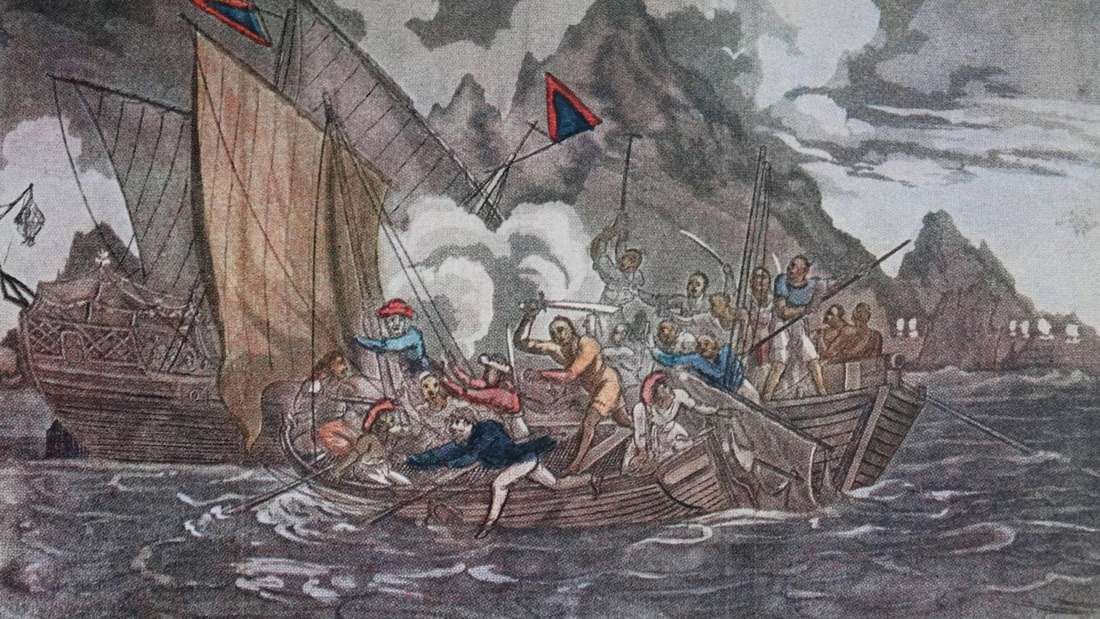
Our research into film distribution protocols led us to examine its largest alternative network: online "pirate" communities.
A note on terminology: while we use the term "piracy" for clarity, we reject its criminal connotations. We view these practices as civil disobedience against monopolistic media control, existing only outside the boundaries of market-driven intellectual property laws.
We have never been pirates
For more than two decades now, movies - so as music and e-books - have been distributed through a parallel online circuit outside the tight stitches of copyright laws. The size of this phenomenon is impressive: visits to online piracy websites reached 141 billion in 2023, accounting for an estimated 386 million visits every single day. That number marks a 12% increase since 2019, according to data provided by the piracy tracking firm MUSO.[2] The United States and India are the countries most affected by piracy, both with 11% of traffic, followed by Russia (6%) and the UK (3%).
Interestingly, pirate films and TV shows captivate 65% of these visits. One could be surprised by this growing trend: weren’t streaming platforms supposed to solve the issue of piracy, with their fatal combination of subscription model and overabundance of content? To understand piracy’s evolution we must take a couple of steps back.
The trajectory of piracy moves alongside media history. When the German goldsmith Johannes Gutenberg invented the movable-type printing press in 1440, he ignited a revolution that led to the first wave of decentralization in the galaxy of the printed word, challenging the existing monopoly of the Roman Church. Gutenberg’s invention and subsequent evolutions made printing books more affordable, leading to a diffusion of presses around Europe. In this renewed media environment, book producers’ guilds assembled to establish a socio-political influence to control who could and could not publish books, influencing the emanation of new laws. Around 1680, owners of publishing presses started to call “pirates” those who ditched the registry of booksellers, marking the first use of the term in this context. As soon as the pirates appeared, accusations of theft of intellectual property followed promptly.[3]
Similarly, in the XX century, activists were called pirates when they hijacked the state monopoly on radio waves to transmit freely, as in the case of the Voice of Peace project. Also, home taping - the practice of recording songs from the radio on tape - was considered an act of piracy and theft against musicians and record labels, famously encapsulated in the British Phonographic Industry’s motto Home Taping is Killing Music.[4]
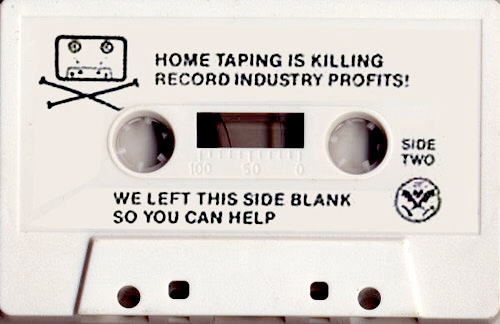
An artifact remembering the music industry’s war against home taping.
Throughout modern history, piracy follows a predictable cycle: new media technologies emerge, disrupting established distribution channels. As people develop novel ways to share content, distributors and lawmakers respond by criminalizing these practices and erecting legal and economic barriers.
But it is only with the diffusion of the Internet that media piracy becomes a mass phenomenon. A symbolic date for this mutation is the 1st of July, 1999, the day of Napster’s release. Napster was a peer-to-peer file-sharing service, that grew extremely popular and was used mostly for sharing music in the form of MP3, a recently invented form of audio compression. Although forced to close by authorities in 2001 (due to issues with copyright law), Napster pollinated the Internet with a new template for media distribution that produced many successful heirs like Soulseek, SciHub, Library Genesis, Anna’s Archive, Karagaraga, rutracker, and more.
Online piracy's story swings between widespread adoption and legal suppression. While laws treat piracy as theft, leading to website shutdowns and criminal charges for their creators, new platforms continue to emerge. [5] In response to this, pirate communities adopted an array of different strategies, favoring obscurity and a general stealth approach to avoid the gaze of law enforcement: invite-only communities, multiplication of domains, etc.
The fight against piracy isn't primarily driven by individual artists and creators. Instead, it's championed by the industry's gatekeepers - publishers, record labels, and movie studios - who dominated media distribution throughout the 20th century.These powerful intermediaries leverage their influence to shape copyright laws that protect their market control rather than creators' interests.
Copyright laws emerged not to protect creators, but to serve publishers' interests. The 1710 Statute of Anne in England, while nominally establishing authors' rights, primarily secured publishers' control over distribution. This pattern continues today.
 Queen Anne of England, who promulgated the first copyright law
Academic research exemplifies copyright's harmful effects. Excessive pricing and restrictive access policies limit knowledge sharing, benefiting wealthy institutions while excluding others. Against this system stands Sci-Hub, created by Kazakh programmer Alexandra Elbakyan. In a 2015 interview, she dismantled the equation between piracy and theft:
“ [...] In our Criminal Code of the Russian Federation, there are separate articles 158, ‘Theft’, and 146, ‘Infringement of copyright and related rights’. [...] Why come up with different laws for the same crime? So, piracy, or infringement of copyright, is not legally equivalent to theft. Piracy is essentially copying information. When information is copied, it grows larger. If you have a book and I make a copy of it, there will be two books. Copying is the production of new items. Not so with theft. If I steal a book from you, there is still only one book. Moreover, in this case, you will lose your book. With copying, the owner is not deprived of their owned object – on the contrary; with stealing, one is deprived. Through copying, new consumer goods are produced; in stealing, they are not. [...] A well-known saying, attributed to the Buddha, states: ‘Thousands of candles can be lit from a single candle, and its life will not become shorter. Happiness does not become less when you share it’. We can add that information does not become less when it is copied. On the contrary, it gets bigger. Piracy is production! (and in the case of Sci-Hub it’s a fairly complex and high-tech production). Therefore, arguments are sought to equate computer piracy to theft. It should be understood that this is a banal game of words and political rhetoric.”
Initiatives like Sci-Hub are laboratories for alternative circulation in an increasingly privatized Web. As Pauline van Mourik Broekman and Simon Worthington note,[7] the Internet's evolution follows our familiar pattern: media companies reacting against spaces opened by pirates and peer-to-peer communities.
Napster, for instance, was contrasted firstly with the release of Apple’s iTunes, a vast e-shop for music tracks and albums, and, later on, by Spotify, which is directly inspired by Napster and similarly offered a massive collection of music. Indeed Spotify, with its user-friendly interface, transitioned users towards paid subscriptions for content that Napster previously offered for free. Certainly, the Swedish company didn’t do that in favor of artists, who are notoriously impoverished by the streaming services models. Conversely, major labels' profits broke records in the past few years, rebounding from the decline that began precisely with the release of Napster in ‘99. The digital commons, which emerged through the Internet breakthrough, got progressively enclosed and their network wealth re-distributed to the major distributors.
The "Streaming Wars" of 2019-2023[8] further fueled piracy's resurgence. As platforms multiplied, content became fragmented behind expensive subscriptions and exclusive deals. Faced with rising costs and hostile policies like password-sharing crackdowns, more users turned to pirate alternatives.
In this brief overview, we tried to contextualize the historical importance of “piracy” and the necessity of adopting certain systems in light of predatory and monopolistic choices from big distributors, sustained by national legal systems. Stories like Sci-Hub are interpretable as forms of civil disobedience: breaking unjust laws to contrast ridiculously expensive market policies to sustain the free dissemniation of knowledge and equal right to research.
This history reveals piracy as a response to predatory market practices. Projects like Sci-Hub demonstrate how civil disobedience can democratize access to knowledge against unjust restrictions. With this context, let's examine two cases that illuminate community-driven file sharing and new ways of engaging with films - insights that will help us reimagine intellectual property for Meshdia's Protocol.
The Black Crow: The Case of Karagarga[9]

Karagarga - Turkish for black crow - is one of the most interesting cases of an international community organized around a system of file sharing. Active since the early 2000s, Karagarga is a members-only online forum, BitTorrent[10] tracker, and file-sharing archive used primarily for sharing and downloading films. Karagarga is specialized “in art-house, alternative, cult, and classic movies”[11] and it explicitly prohibits the upload of Hollywood or Bollywood movies. Among many treasures, one can find prized movies such as Manoel de Oliveira’s “Doomed Love”, Robert Bresson’s “A Gentle Woman”, and Jean-Luc Godard’s “King Lear”. Through time, Karagarga started to accept also music and books, maintaining similar rules of conduct for these other media.
The preservation and diffusion of this historical material are crucial for many movies, that exist only in one copy due to the rapid evolution of media support (tape, VHS, DVD, blue-ray, etc.). Writer Glyn Moody[12] points out a cruel irony: while films deteriorate over time, copyright laws actually accelerate their loss by preventing preservation through duplication.
Karagarga operates on a strict invitation system with annual limits. Members maintain an "upload-to-download ratio" that determines their download privileges. For example, downloading 200GB of content requires sharing at least 100GB with others. Members can improve their standing by helping peers or re-sharing content,[13] while a free daily movie encourages regular participation.
Members can also contribute with fan-subbing to Karagara: the website is often one of the few (if not the only) resources for watching important movies in languages in which they were never translated. It’s hard to overestimate this aspect: subtitles are one of the main vectors of circulation for cinema and the active community of Karagara provides the world with precious translations. Channeling the ‘Social Cinephilia’ manifesto produced during Think Well 4, we see how Karagarga’s members’s cinephilia becomes a vector of conviviality and generosity and a method “to find ways out” for films, echoing their force in different cultures. Karagarga’s long-lasting influence is encapsulated in one episode recently reported by TorrentFreak.Turner Classic Movie - an American movie-oriented pay-TV network- recently screened the Spanish classic movie “The Garden of Delights”. Since the movie is only available in its original language, it needed subtitles: yet, even on a Warner Bros’ owned TV the subtitles were actually produced on Karagarga, as showed by the end credits.
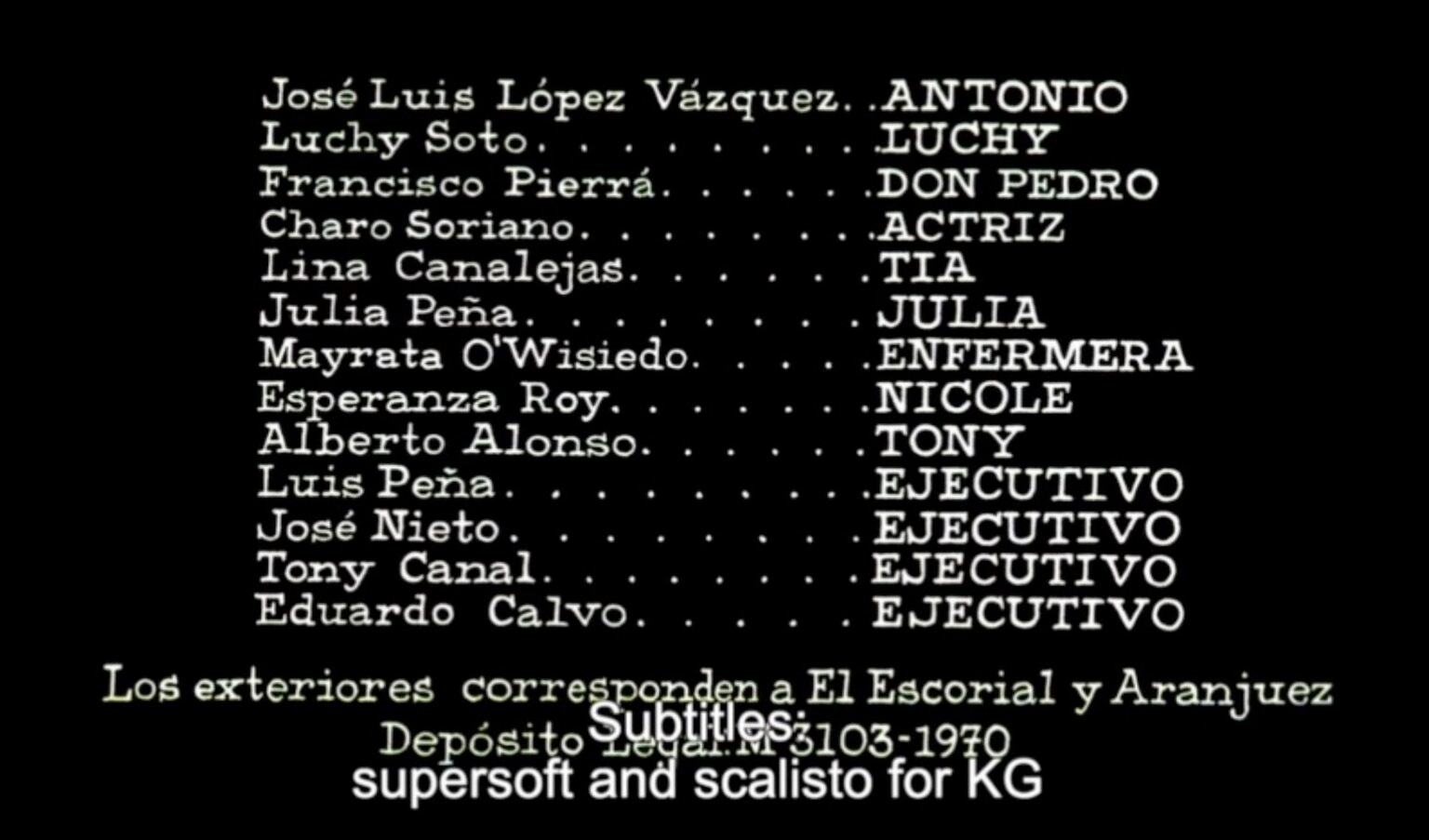
Beyond file-sharing, Karagarga functions as a curated film school through its "Master of the Month" program, exploring themes from Southeast Asian action cinema to films about the European debt crisis. [14] Next to this system of sharing, an online forum - which preserves its 2000s Internet aesthetics - is active and used to discuss films, music, and books but also to share requests and coordinate the preservation of Karagarga’s archive.
Karagarga has evolved into one of the most significant archives of non-mainstream cinema, maintained purely through community rules and cinephile love. While exclusive, this careful access policy has protected the platform from legal threats while fostering deep cinephile engagement. The system of contribution, backed by the cinephile desire to access more movies, incentivizes new interactions with the media, like creating fansubs or re-seeding a movie’s torrent.
Karagarga's model reveals a path for the Possible Cinema Protocol: one where cinephile passion drives alternative forms of film circulation. By formalizing peer-to-peer sharing and gift economies, Meshdia aims to create a network that serves film lovers worldwide.
Perhaps most telling is celebrated director Travis Wilkerson's decision to release "The Fuckee's Hymn" on Karagarga instead of the festival circuit in 2023, citing the platform as "the single most influential presence" on his filmmaking. Such acts suggest a future where artists bypass traditional distribution to connect directly with passionate film communities. Meshdia aims to inspire similar gestures of mutiny from the unfairness of the film industry, allowing artists to try an unexplored path.
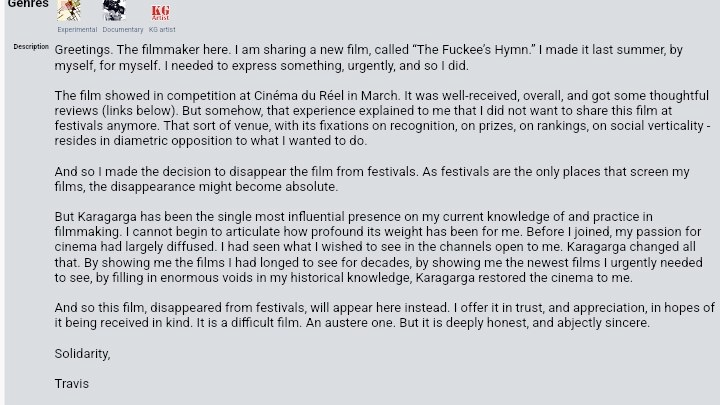 Travis Wilkerson’s message on Karagarga
Words over images: the case of Bilibili
Let's explore Zhen Troy Chen's analysis of Bilibili.com, a Chinese video platform, and its incorporation of the concept of Shanzai. This analysis reveals a strikingly different approach to creativity and a practical critique of traditional copyright ideas.
The term Shanzai (山寨) denoted fortified mountain forts and strongholds, typically found in regions beyond the control of imperial governance. Over time, particularly during the Song dynasty (960–1279), it evolved to describe bands of outlaws who resisted and eluded corrupt officials to carry out what they deemed righteous acts. Although belonging to a different setting, shanzai can be compared to Western maritime pirates: libertarians existing at the margins of society and perpetuating their unique way of living at every cost.
In the early 00s, as China became the biggest manufacturing country in the world, shanzai started to be used as a derogatory word for counterfeit products and knock-off electronic devices, purchased by people coming from rural areas. The shanzai approach is present also in the circulation of media in China, where pirate CDs (dakou CDs), DVDs (region 9 DVD), and videogames flooded the country in the 00s. This "pirate" distribution facilitated the dissemination of Western media before receiving official authorization, often circumventing bans imposed by authorities. The piracy circuits led to the development and broader diffusion of VPNs, which are used today to bypass the Chinese Great Firewall and navigate the Web without governmental limitations.
“In the early years of the 21st century, China arguably possessed the most developed and complete film archives in the world. If you were patient enough, any film from any country could be found in the corner video shop – it was like a no-man’s-land of images. Pirate disc vendors and buyers also formed a unique alliance and established an alternative underground distribution and circulation network for pirated films.”[15]
The Chinese conception of shanzai, nonetheless, not only affects the distribution of media but also shapes how the public interacts with and manipulates them. Shanzai is an attitude that challenges Western assumptions on the sacred immutability of the work of art and the role of individual genius in embracing a potentially infinite remix and re-appropriation of existing artistic tropes. This concept animates the spirit of the video platform Bilibili.
Bilibili is a user-generated video platform founded in 2009 by Xu Yi inspired by existing Japanese fan-video platforms like AcFun. The name Bilibili comes also from the fandom culture, as it is a nickname for the protagonist Mikoto Misaka in the anime A Certain Scientific Railgun. The platform hosts a significant amount of user-generated content, including fan-made videos, fan edits, parodies, and other derivative works based on copyrighted material such as anime, manga, video games, and movies. However, it’s not uncommon to find freely accessible popular anime series on the platforms. Bilibli, especially in its early years, became a space for the Chinese youth and the fandom subculture.
The pirate "shanzai" spirit, referring to unauthorized derivative works, challenges notions of authenticity and originality rooted in Western thinking. Derivative artworks are the most popular content on Bilibili, expressing a participatory approach distinct from passive viewership.
The most distinctive function of Bilibili is another manifestation of shanzai: the idea of bullet comments, also known as danmu, or danmaku (Chinese: 弹幕). Danmaku are live users’ comments overlaid on top of the video, that can be personalized in their visual style, format, and motion. The term danmaku originally connotates an arcade game genre: a vertical shooter game where players guide a spaceship through spectacular explosions and optical mirageries.[16] The baroque visual experience of these games inspired a way of sharing comments and subtitles in the Japanese video sharing community, specifically with the platform Niconico “The comments will be "shot" onto the screen in a “bullet curtain” likeness, and will be reproduced and displayed in accordance with the time axis thereafter. The comments go beyond real-time, with previous and later comments being shown together.”.[17]
 A danmkau game with its characteristic crowded visual experience
Bilibili, and other Chinese websites, popularized this practice making it accessible to millions of users. The platform offers users a deeper customization tool using its API, allowing dynamic change of danmaku comments and even the possibility of drawing shapes on screen. This feature is a symptom of a playful and interactive approach to the moving image, that allows for the creation of a shared context where different voices intersect with the flow of the video.
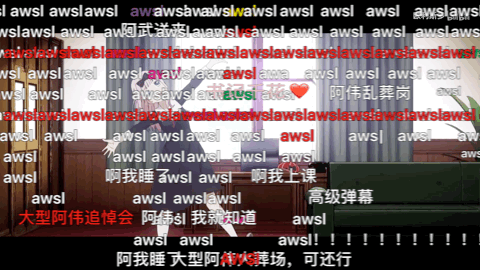 A visual danmaku example
With danmaku, user comments have usurped the spotlight, becoming the focal point of video content itself, and viewers’ direct engagement often surpasses mere watching. Danmaku is related to the practice of fansubbing popular on systems like Karagarga: they both share an “amateur, free, unregulated and even illegal” character and they are the product of bottom-up (sub)cultures intersecting with mainstream media products. China saw a proliferation of pirate fansub communities, which played a particularly prominent role in spreading Western movies and TV shows.
But danmaku goes one step further, by shuffling the semiotic hierarchies among the work and the viewer, through a videogame-inspired approach that privileges interactivity over passivity. Instead of admiring works from a distance, users on Bilibili treat their favorite works of fiction as proper opere aperte (open works)[18]: a malleable canvas that can be tweaked by and shaped into many new different forms. The original work is honored and expanded upon, weaving together new dimensions through participative intertextuality.
In conclusion, the Chinese concept of shanzai challenges the Western philosophical ideas - the aura of the artwork, the primacy of authenticity, etc. - that underlie the legal framework of copyright. Moving beyond the frame of piracy as civic disobedience, shanzai reveals a different ontological understanding of creativity and authoriality. Specifically, through the practice of danmaku, viewers assume an active role, developing a new mode of interaction with videos, by juxtaposing their words and comments with the video flow. Moving into the interstices of the artwork, danmaku reveals which other exchanges and conversations a work of art can stimulate.
The joyous, anarchic nature of this practice should be acknowledged as we strive to redefine the interaction space with movies with Meshdia, instantiating alternative pathways for their circulation.
Meshdia researches, designs, and prototypes new circulations for cultural work(s). We conceive media as networks and networks as media.
Meshdia moves in two directions:
- Create bottom-up and plural counter-infrastructures opening up new spaces within society.
- Intertwine game design, philosophy, legal, and technological imagination for growing new branches of culture.
We are currently researching and designing a social protocol for re-imagining cinema circulation. The Possible Cinema Protocol channels the cinephile's labors of love into new playful forms of sharing, disseminating movies in alternative ways.
For its existence, Meshdia thanks SAVVY Contemporary (United Screens) and Beyond Culture of Ownership, a program by Serpentine Galleries and RadicalXChange, for their support.
Interested in new counter-infrastructures of sociality? Contact us via email or in our Telegram group.
